
Two Big Resolutions for 2026
Embrace Your Weaknesses & Show Mercy

Over the holidays, I’ve discovered a new obsession listening to a podcast called Founders that features host David Senra talking about what he’s learned from reading biographies about business founders—from Andrew Carnegie to Mark Zuckerberg.
After listening to one of his latest podcasts on the founder of Red Bull, I noticed a new podcast that was posted on Christmas Eve about Jesus as a founder. So in one click, I went from billions being made selling a rebranded Thai tonic through extreme sports to the shores of the Sea of Galilee.
Whiplash indeed!
My favorite moment in this podcast came as Senra talked about mercy:
“Mercy is an emotional word…It is hard to define, though instantly recognizable when exercised. Mercy is grace. It is undeserved. Jesus says that if you get the glorious chance to show mercy, do so without forethought or afterthought, without reason or logic, not expecting thanks…”
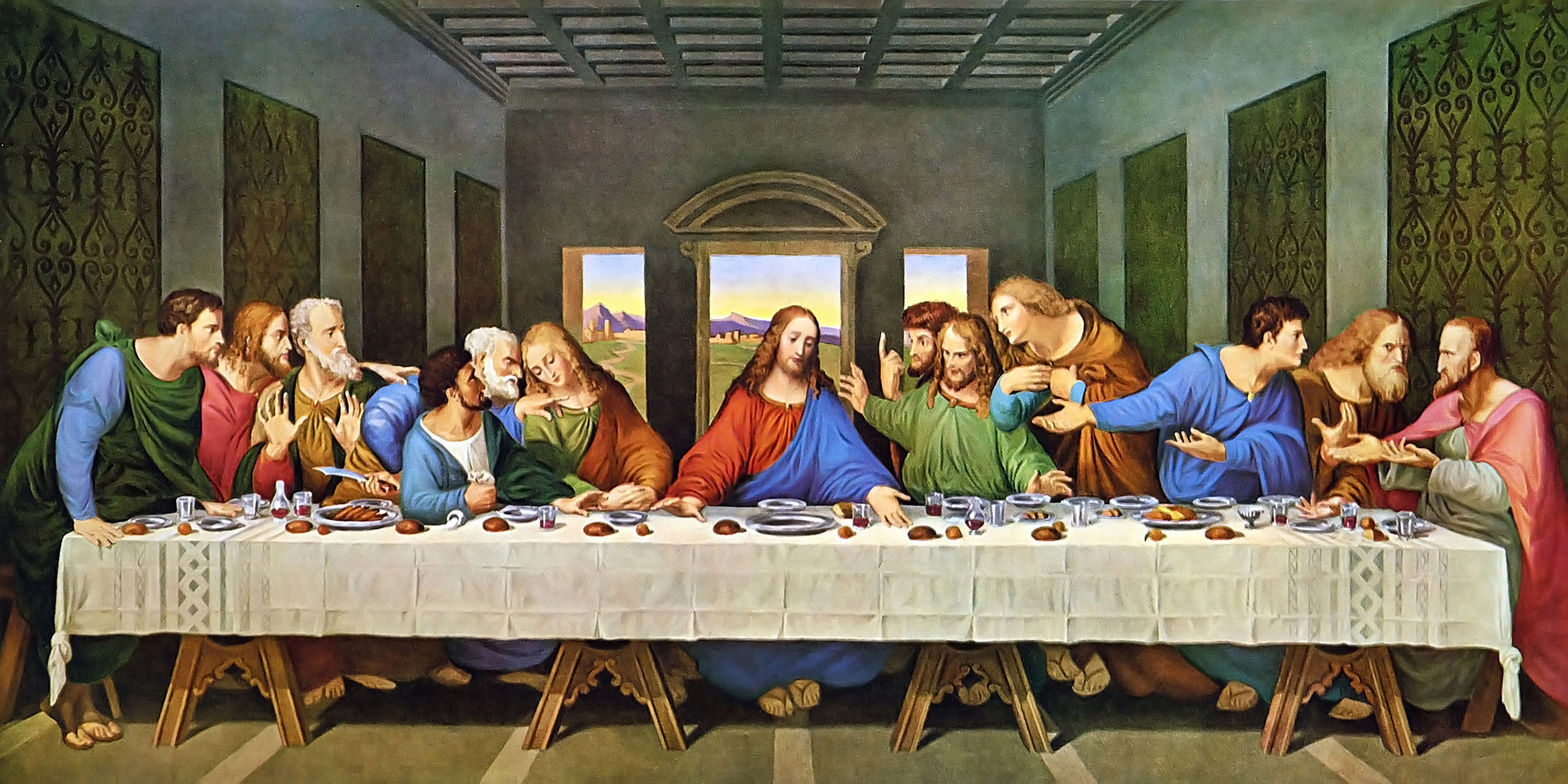
While Senra didn’t mention The Last Supper, if we imagine Jesus as a founder, we can’t escape this moment sitting with his new leaders around a makeshift boardroom table.
It’s succession planning at its best.
So for a moment, cast your mind back to that moment immortalized by Leonardo da Vinci, where Jesus had just told his apostles that one of them would betray him. We see in da Vinci’s mural the men at the table talking one with another. Fortunately, we know from the historical record what they said: “They were exceeding sorrowful, and began every one of them to say unto him, Lord, is it I?”
“Is it I?”
Notice they didn’t point at each other and throw around accusations. No one stood up and yelled, “It’s Judas!”
Clearly, Christ’s disciples had learned from his Sermon on the Mount, where Jesus had told them to “judge not.” In fact, this business of beams and motes that Jesus taught seems to be closely related to our inability to see ourselves clearly. I’m not sure why we are able to diagnose and recommend remedies for other people’s ills so well while we often have difficulty seeing our own.
So, as we face a New Year, let’s look very carefully at the humility required to simply ask: “Is it I?”
In other words, what are my weaknesses? And more importantly, what am I going to do about it?
And here we see the convergence of social science and the teachings of Jesus, as both teach that weak things can become strong. In fact, if you study both the words of Jesus in the scriptures and the social science around team roles, it’s pretty clear that our weaknesses and strengths are interconnected.
On the one hand, Jesus teaches that “I give unto [you] weakness that [you] may be humble,” and on the other, Dr. Meredith Belbin teaches of “allowable weaknesses.”
I’ve actually taken Belbin’s test several times and am a big fan of his work. While working at the Henley Management College in Oxfordshire, England, Dr. Meredith Belbin identified nine clusters of behavioral attributes and established a test that measures which of these nine clusters relate to people’s natural strengths and weaknesses.
For example, this is what the Belbin test said about me as a Plant: I can be “creative, imaginative and free-thinking” as I “generate ideas and solve difficult problems” BUT I also tend to “ignore incidentals” and can be “too pre-occupied and distracted with other things to communicate effectively.”
SQUIRREL!
Anyone who has ever worked with me knows this to be true.
As a Resource Investigator, the test from Belbin also described one of my strengths as being “outgoing, enthusiastic and open to exploring opportunities,” but it also said this is connected to the weaknesses of being “over-optimistic and losing interest once my initial enthusiasm has passed.”
Yes, one day I will publish that novel I’ve been working on for 20 years!
And finally, the Belbin said that as a Shaper, I “thrive on pressure” and love big challenges and overcoming obstacles, but that I also tend to push so hard that I “offend people’s feelings” and sometimes can even “provoke” them.
Reminds me of the time a young creative writer I had mentored told me after landing his first job as an Executive Creative Director that while he was grateful for what he learned from me, that I was, and I’m quoting, “A horrible boss.” Of course, after hearing this, I immediately called my daughter Zoe, who works for me, and asked her, “Hey, am I a bad boss?”
After a long pause, she said, “Well, I can see how someone might say that, but I know when I can push back.”
What I love about the work of Dr. Belbin is that he describes our weaknesses as “allowable.” In other words, in order to have our strengths, we are also stuck with these weaknesses. In his work, weaknesses are portrayed not as flaws to be ashamed of or hidden. To put it a different way, sometimes a strength has to be bought at the cost of a weakness.
We are often taught that the road to success in work and life is fixing our weaknesses, but going back thousands of years, that’s not what Jesus promised. “I give unto [you] weakness that [you] may be humble; and my grace is sufficient for all [people] that humble themselves before me; for if they humble themselves before me…then will I make weak things become strong unto them.”
Grace. Mercy.
So how does that work exactly? How can we make something weak strong?
Well, one way we can make weak things become strong is to surround ourselves with people who complement us and are willing to show us a little a mercy. We then must be humble enough to let them help turn our weaknesses into strengths. In fact, this is the entire point of Dr. Belbin’s work. If you have a “Plant” and a “Shaper” on a team, make sure that you complement them with a “Completer-Finisher” and a “Coordinator” because together they both can turn their weaknesses into strengths.
And as a founder, I think Jesus communicated the same thing to his team. Be humble. Show mercy. And before pointing fingers at a colleague, ask a simple question: “Is it I?”
Thanks for your introspective insights Geoff. Asking ourselves ‘Is it I’ (with humility & without judgement) is a great place to start as we look for understanding and what to do next. And funny enough, some of the leaders I learned the most from weren’t very fun to work for; but they made better. I still appreciate what they taught me but probably wouldn’t want to work for them again…unless they’ve been asking themselves is it I? 😜